Travelling the world is the best classroom you can have. There’s no such thing as an unbiased education, so the next best thing is a multi-biased education.
— John Smart
If you want to realize your potential it is essential to listen to a wide variety of music styles. Here are a selection of 50+ pieces from all over the world that had made a connection with my children.
Digital pianos usually include several built-in piano tones, however due to hardware costs these are unlikely to produce the highest quality sound. If you want to listen to or record the best audio quality then you will need to invest in software piano products. These range in price from about USD $10 up to hundreds of dollars per instrument.
If you want to record the sound of your digital piano, Audacity is free, intuitive-to-use and since the year 2000 it has been the most popular open-source audio software available for Apple macOS, Microsoft Windows, and Linux. Audacity lets you record audio from any input (including USB Audio) and edit any audio recordings.
Video editing software
If you want to combine audio recordings with videos, images, or text titles / captions (e.g. to upload to YouTube), then you will need to use video editing software.
AviDemux is free, intuitive-to-use and since the year 2001 it has been the most popular open-source video editing software for Apple macOS, Microsoft Windows, and Linux.
If you require more advanced video editing, then the best free software is DaVinci Resolve, available for Apple macOS, Microsoft Windows, Linux, and iPadOS.
If you are using Apple macOS, then the built-in iMovie software is also simple and effective to use (although it is not very intuitive – so you should watch some training videos first).
If you want easy-to-use commercial video editing software, then Adobe Premiere Elements is only about USD $99 (for a perpetual licence – not a subscription) and is available to purchase directly online for both Apple macOS and Microsoft Windows. Adobe also provides a 30-day free trial, so you can try it out before deciding if you want it.
Music Notation Software
MuseScore 4 – exactly as it is described on the box: ‘The world’s most popular music notation app‘. Completely free (and open source), no limitations. Professional music notation software – easy to use, yet powerful. Available for Apple macOS, Microsoft Windows, and Linux.
The piano was born in the city of Florence in the Grand Duchy of Tuscany (now part of Italy), in the year 1700, more than 320 years ago.
Bartolomeo Cristofori invented and built the first pianos (Cristofori music stores in Singapore are named after him). The invention of the piano was paid for by the Medici family who funded Renaissance art from selling wool. Indeed, it could be argued that the piano was the final – and greatest – piece of Renaissance art.
The first piano was actually called a ‘harp-harpsichord’ and looked like a harpsichord:
Today pianos now come in many sizes and 3 shapes:
Grand – large for concert halls and outdoors events
Upright – medium-sized for private studios and homes
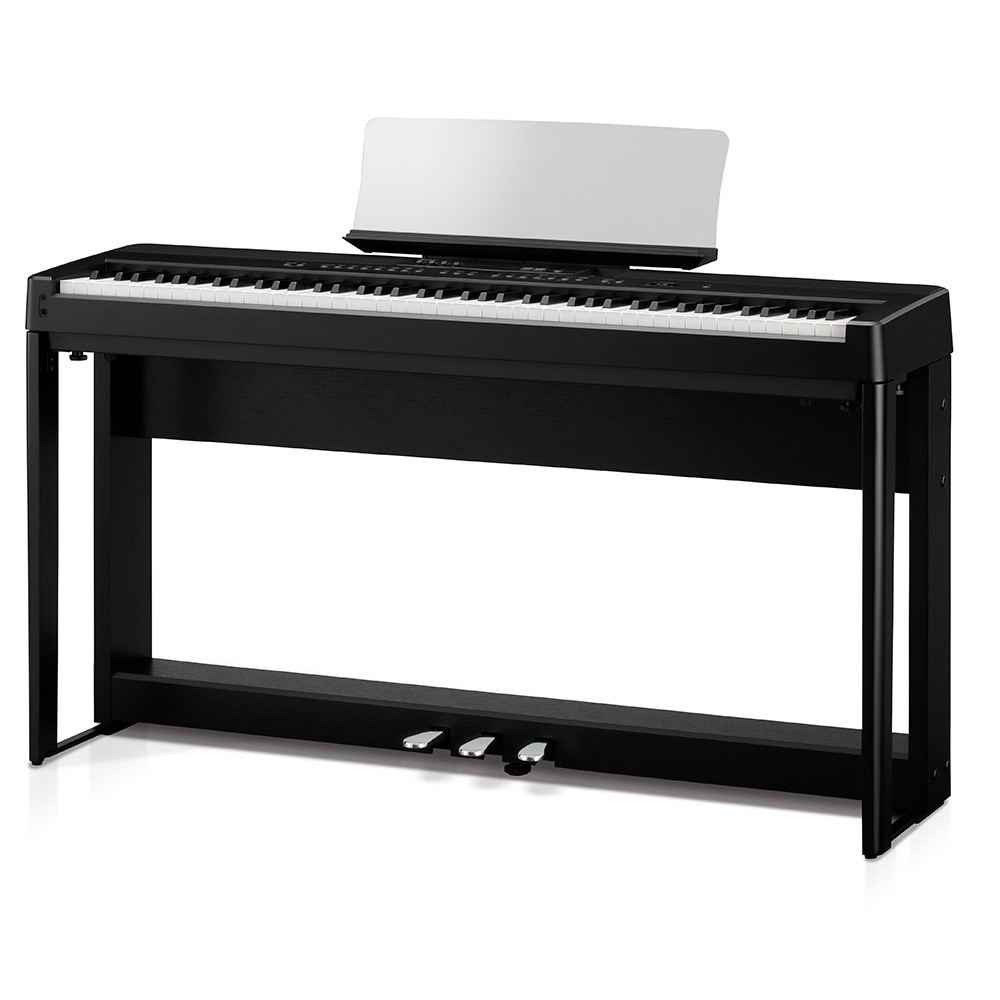
Portable – small digital pianos that play through speakers, designed for many types of locations
The cabinets are usually made of wood, and the shiny black pianos are coated with polyester plastic.
The white key surfaces were originally made from Ivory from elephant tusks, and the black key surfaces were originally made from Ebony wood. These are now illegal and/or too expensive, so now they are both made of plastic. The first Cristofori pianos had 54 keys (shown above), Mozart’s Anton Walter pianos had 61 keys, Chopin’s Pleyel pianos had 78 keys, most pianos today have 88 keys, and there are grand pianos available with up to 108 keys.
Pianos are stringed instruments; the strings are made of metal. Brass was originally used, however now piano strings are made from tempered high-carbon steel – with the base note strings being wound with copper wire.
The shiny finish coating the cabinets of most pianos is PolyEster (PE).
Pianos are popular around the world for accompanying singing in schools, choirs, and bands, as well as playing for personal leisure and relaxation. They are popular compared to other instruments because they have a wider palette of sound and they don’t require warming up, tuning, and/or cleaning every time you play them.
Over the past couple of decades, like with most technology, digital pianos have improved in quality whilst at the same time have become more affordably priced. Just as with computers, you should no longer expect to be stuck for the next decade with the same digital piano that you purchase today. Importantly though, this does not mean that you should purchase a low-end / inferior model today with the plan of upgrading to a better instrument ‘once you are sure that you enjoy playing‘. You see, unless you grow to love the instrument you are playing – then you are more likely to give up playing piano altogether, and you definitely will not progress as fast as you could. You must therefore always invest in the highest quality instrument that you can reasonably afford – this is especially important for beginners! A professional player is both already in a strong, secure relationship with piano playing and is also used to negotiating the occasional recalcitrant instrument and still managing to enjoy their redeeming qualities! A beginner has no such patience in either of these areas!
With that in mind, always value the opinions of beginner players – and any potential future beginner players – when you take into account the various features and prices of the digital pianos that you are comparing. Below are some important parameters to consider before making your decision. I have ordered these roughly from most important to least-important, however their importance will vary from person to person and from family to family.
1. Cabinet style
Even for residents that are not going to be playing the piano, having a piano in any shared living area is going to impact everyone that shares that space – both in terms of the volume of space that the piano will consume, and also how the piano’s appearance will effect the aesthetic look and feel of the space. It is therefore essential to consult with all adult residents before proceeding with your piano purchase.
Digital pianos are available in three main cabinet styles: portable (smallest), upright, and grand (largest). Whilst the upright and grand style cabinets attempt to mirror their acoustic piano counterparts, they usually both also available in sizes that are smaller than any acoustic piano. Portable pianos are the smallest of the three styles, however they can still be attached to solid stands that give them equal stability and features to their upright and grand siblings. The main trade-off that portable pianos make is in the area of speaker size and resulting speaker sound fidelity. Therefore if players are going to mainly play using headphones then portable pianos are well worthy of consideration. A second trade-off is that, if you wish to play from piano sheet music, you will need to invest in a separate music stand unless you wish to develop of C-shaped, hunchback posture! A third trade-off is that even the premium model portable pianos from Roland, Kawai, and Yamaha never have the top-of-the-line key action inside them, instead they generally have the second-best key action that their manufacturer makes.
2. Price
Entry level
Whilst you can purchase a new entry-level portable instrument for around AUD $600 (USD $400), this is only the keyboard by itself – it does not usually include a stand, seat/bench/stool, dust cover, or 3 pedals. To maximise the enjoyment derived from the instrument (and to protect your spine/posture), a reasonable quality stand and seat/bench/stool (ideally adjustable height) is essential. Often it is better (cheaper and easier) to purchase these items at the time of purchasing the piano. Indeed, manufacturers often sell complete kits (piano + stand + 3-pedal unit) with their entry-level instruments at around the AUD $1,000 (USD $700) price point. Remember also to budget for a quality pair of headphones if you plan on practising in silence very often. In total, a minimum budget of AUD $1,200-$1,500 (USD $800 – $1,000) will give you the best entry-level outcome.
Premium level
For around AUD $8,000 (USD $6,000) you reach the top end of the digital piano spectrum. These premium instruments are the ones you should be comparing against acoustic pianos in the same price range (e.g. the Kawai K-300J, Yamaha U1J, and Steinway Essex EUP-116E). If your budget allows, it is this end of the market you should focus on when you start your shopping adventure – as it is only premium level digital pianos that provide the best touch (key action feel), tone (sound experience), and combination of those two to deliver the ultimate experience for the player (and also the audience).
Mid-range
If your budget cannot stretch sufficiently to afford a premium digital piano then there are still many options in between. Note however that none of these will provide the same touch (key action feel), tone (sound experience), or combination of those two as their premium siblings. The reason for this is obvious: all digital piano manufacturers want to entice people into purchasing their top of the line models.
3. Portability (size, weight, and build quality)
If you plan on performing on a stage or frequently moving your piano between venues (or even between rooms) then its size and weight are important considerations. Some premium model digital pianos cannot be easily disassembled, or doing so may void your warranty. Additionally, the ruggedness of construction is another important factor if you plan on moving around a lot with your piano. The more sturdily built stage pianos often have hard-cases available to purchase and these provide essential protection from damage caused in transit or storage.
4. Touch (key action feel)
J.S. Bach only played a piano on a few occasions (he composed music only for harpsichord and organ), however when he finally did have a chance to meet with a piano he complained that its action was far too heavy and cumbersome to play enjoyably.
It is important that we all listen to Bach’s advice: heavy or sluggish actions are very rarely desirable or useful (probably never).
The most important thing to note in the touch department is that you must play each model for at least 45 minutes to an hour in a single session in order to fully gauge whether an action is too tiring for you. A common mistake is to only play an instrument for 15 minutes – just about every action will feel fine if you play on it for such a short period of time as it takes a while for fingers to tire out. Also, if possible try to test each instrument on different days to ensure that you can determine which instrument was that one that tired out your hands – whereas if you test two instruments back to back on the same day then your hands might be tired from the first instrument and that would then adversely interfere with your experience and evaluation of the second instrument.
Lastly, note that acoustic pianos are designed to have as small of a weight difference as possible between their top key and their bottom key. The top key on a Fazioli has a touch weight of about 46 grams, and the bottom key is about 50 grams (a 4-gram spread across the entire keyboard). A Steinway (they also manufacture the key actions for Fazioli) has very similar key action weighting: about 46 grams at the top key, and about 49 grams at the bottom key (a 3-gram spread across the entire keyboard). Unfortunately most digital piano models have inferior key weighting, e.g. the Casio GP-310 and GP-510 models have a touch weight of 40 grams at the top note and 60 grams at the bottom note – a 20-gram spread across the entire keyboard: almost 7 times more than acoustic pianos!
5. Tone (sound experience)
Tone is the sound of the instrument, and there is a very wide variety of piano tones in existence – these vary by brand of the instrument, style of the instrument (upright versus grand), how the instrument has been tuned, and also the vintage of instrument! Indeed rarely do any two instruments sound identical – even instruments of the same model and year and produced in the same factory.
The good thing about digital pianos is that they can play many different tones, and even better: you can add an unlimited number of tones – both now and in the future – if you connect them to a computer, tablet, phone, or other device (e.g. a Raspberry Pi). This is why tone is below touch in the list of key priorities when you are deciding which piano to purchase: you can always enhance or upgrade the sound later. Indeed, your tone taste preferences may change in the future as you mature as a player. Different tonal flavours also suit specific styles and moods of music, so you are likely to want multiple tones eventually.
Just considering acoustic grand pianos alone, there are many high quality brands each with their own unique tone that have attracted thousands of fans and ambassadors – here are half a dozen of my favourites (it is very difficult to dislike any of these brands):
Fazioli F308 (Italy 🇮🇹) – favoured by classical concert pianists like Bruce Liu and Daniil Trifonov, jazz pianists like Herbie Hancock and Chick Corea, and also by Freddie Mercury. Shigeru Kawai SK-EX (Japan 🇯🇵) – the second-favourite piano amongst classical concert pianists. Yamaha CFX (Japan 🇯🇵) – favoured by Ben Folds, Richard Clayderman, Elton John, and Lara de Wit (lara6683). C.Bechstein D 282 (Germany 🇩🇪) – favoured by Stephen Hough, Dave Brubeck, Duke Ellington, Fasil Say, András Schiff, and Vladimir Ashkenazy. Blüthner Model 1 (Germany 🇩🇪) – often used by the Beatles, and favoured by Arthur Rubinstein, Sergei Rachmaninoff, and Claude Debussy (and me if that counts for anything!). Steinway Model D (USA 🇺🇸) – favoured by Billy Joel, Tiffany Poon, and 郎朗 (Láng Lǎng), it is the third-favourite piano amongst classical concert pianists.
Yamaha digital pianos include samples from both their Yamaha CFX and Bösendorfer concert pianos, and other Yamaha pianos. Kawai digital pianos include samples from their Shigeru Kawai SK-EX concert piano and other Kawai pianos. Roland digital pianos include modelling of both the Hamburg Steinway Model D and the New York Steinway D concert pianos. Casio digital pianos include samples from C.Bechstein D 282, Bösendorfer, and Hamburg Steinway D concert pianos. Korg digital pianos include samples from Fazioli F308, Hamburg Steinway Model D, Yamaha CFX, and Bösendorfer concert pianos.
As mentioned, there is nothing stopping you from playing all of these piano tones on any digital piano you choose – the only difference between models is the setup complexity (discussed next).
6. Connectivity
Whilst all of the latest digital piano models all offer myriad fun and useful features, connecting your digital piano to a computer, tablet, smart-phone, or other device can unlock many additional possibilities.
All of the latest digital piano models can be connected to other devices either via USB cable or wirelessly via Bluetooth. Doing so can let you record directly to the device (e.g. via USB Audio), playback any piano tone (or other tones) you like (e.g. via USB Audio), record the notes you play (MIDI), play back the notes previously recorded by you or someone else (MIDI), or take music lessons or learn from an app. (via MIDI).
Bluetooth Audio playback is also starting to become standard across all brands and models. This turns your digital piano into a Bluetooth speaker system, and at the same time lets you play along on the piano.
USB Audio
USB Audio lets to you accomplish two things:
a) Easily upgrade the quality and variety of sound that your digital piano can play. All digital pianos can have their sound improved by connecting to a computer, tablet, phone, or other device (e.g. Raspberry Pi). However using USB Audio makes this much easier by enabling transmission of audio data in both directions (in addition to regular MIDI data). So if you ever want to upgrade to a better audio experience from your piano, then USB Audio is both the easiest and best quality way to achieve this.
b) Record high-quality audio (CD-quality or higher) directly to a computer, tablet, phone, or device. Until USB Audio was available about a decade ago, the only way to record your digital piano was either via a microphone, analogue output (e.g. RCA cables), or by recording to a USB drive plugged into the piano. USB Audio makes recording your piano an order of magnitude easier by allowing you to record directly to a computer, tablet, phone, or device using nothing more than a single $0.50 USB-B cable (a USB printer cable).
Using USB Audio saves you the hassles of:
Plugging a USB drive into the piano. Selecting record on the piano (and potentially selecting the USB drive / option). Unplugging the USB drive from the piano. Plugging the USB drive into a computer. Finding the USB drive on the computer. Finding the file of the recording on the USB drive (usually by sorting by the timestamp as the piano’s automatically-generated file name will likely be meaningless!) Copying the file of the recording from the USB drive onto the computer. Opening the file of the recording in a DAW or audio editor to edit it. Deleting or renaming raw recordings on the USB drive before you forget which one is which.
Using USB Audio avoids those 9 painful steps – steps that must be performed every single time you want to make each new recording. It also ensures that your recording quality 100% matches the original performance, i.e. the quality is not degraded which is the case if you were to record using analogue output (line-out).
If you see yourself in the future needing to perform either of those two activities above, then first consider digital pianos with firmware that supports USB Audio from Roland (since 2020), Yamaha (since 2018), Korg (since 2021), Kurzweil, Dexibell, and Studiologic (Numa Compact 2). Note that, as of 2023: Casio, Kawai, and Nord digital pianos do not yet support USB Audio.
7. User interface
The method of configuring and controlling the features on each digital piano varies from brand to brand and model to model. Manufacturers tend to include less buttons and therefore more complicated controls on their entry-level models and reserve richer, friendlier user interfaces, like screens and touch panels, for their premium models.
However if you connect a reasonably modern Apple or Android tablet or smart-phone to your digital piano it is likely the manufacturer has an app. available that gives you full control over all of the piano’s features via a touch-screen interface. Doing this means you can focus your choice of digital piano on those 6 more important criteria above.
8. Warranty and support
In many countries the warranty for a digital piano will be much higher on the list of importance. However here in Australia a piano’s warranty period is determined by statutory law (based on reasonably expected lifespan), and is not dictated by the manufacturer. That said, many digital piano manufacturers are promising 5 or 10 year warranties (e.g. Kawai and Roland). Support can take a number of forms, from online support in piano forums (hi James!), support through dealers, to direct phone support provided by the manufacturer’s regional offices.
9. Stand (for portable pianos)
If the other criteria have resulted in you deciding to purchase a portable digital piano then there are a few choices for stands:
a) Manufacturer’s matching stand (usually wooden) – these are usually very sturdy, and are designed for home, studio, and classroom use. They are generally not very portable, requiring you to purchase an additional stand if you plan on taking your piano to other venues very often.
b) U-shaped stand – these are portable, and are the most sturdy of all portable stands. However they are usually not height-adjustable so you can’t play whilst standing. E.g: Roland KS-G8 (available in black or white) VANPHY (available in black, grey, or white)
c) Z-shaped stand – very sturdy and being height-adjustable, these suit people who may want to stand up whilst playing. E.g: Roland KS-10Z (available in black or white) Liquid Stands (available in black, chrome, light blue, or purple) Stellar Labs (black)
d) Table-style stand – very sturdy and height-adjustable, although not quite as sturdy or as stylish as the U-shaped and Z-shaped stands. E.g: Xtreme KS-141
e) X-shaped stand – whilst these are the cheapest type of stand to purchase (often USD $15-$25), they are the least stable type of stand and make it difficult to play when seated because your knees may hit the bars of the stand. I would only recommend using an X-shaped stand for temporary venues where you will be standing up whilst playing. These are also very dangerous stands to use if you have small children under 6 years old as they are easy to pull over and the weight of a digital piano can easily injure, maim, and/or kill (indeed Yamaha include topple-prevention feet on their wooden stands to reduce the risk of their pianos being knocked over).
10. Bench / stool
Whilst cabinet-style digital pianos usually come with a basic matching bench, and grand-style digital pianos usually come with a matching adjustable-height bench, it is worth noting that there are a wide range of options available. Choice of bench is important because the height a player sits at effects their posture, and no one wants their spine to end up C-shaped! Also portable digital pianos do not usually include a bench with them, so you will have to purchase your bench separately for these. Here are half a dozen options:
a) Gas-lift / hydraulic adjustable-height bench – these are extremely useful if you have multiple members of the family sharing the same piano. Starting around USD $120. E.g: Xtreme KTW23 On-Stage KB9503B
b) Manually-adjusted adjustable-height bench. Usually USD $70 – $100.
c) Fixed-height bench. Usually around USD $50.
d) Drum throne. Starting from around USD $30.
e) Premium fold-away bench – more comfortable – more padding and usually wider – than the budget benches. Starting around USD $30.
f) Budget fold-away bench. These are the cheapest style of bench. Starting around USD $15.
Coda
Now that you are up to date with the latest information about digital pianos, you are well-informed and ready to embark upon the joyous and cathartic experience of piano shopping! Always remember to visit stores and play all of the instruments you are comparing, and other competitor instruments, so you can hear, feel, and see for yourself their multi-dimensional spectrum of differences.
If you would like even more information before you embark upon your piano buying journey, below are some trusted online reviewers. Note that these are piano sales people – so their expertise is focussed mainly in pianos, and not in digital technology. Therefore for any digital technical specifications (e.g. USB, USB Audio, Speaker power output, and even key weighting) – it is important to only ever trust the piano manufacturer’s official user guide / user manual / instruction manual. Even the trusted reviewers below (Stu, Ted, and Patrick) regularly make mistakes in these areas. On that note, also never trust text on web sites / online information for digital technical specifications – even a manufacturer’s web site – as these are usually written by marketing or advertising people who also lack the necessary expertise in digital technology!
Trusted Reviewers
Stu Harrison (Merriam Music, Toronto, Ontario, Canada):
Stu reviews most models released by Roland, Kawai, and Yamaha – both individually reviewing each model as well as providing comparison videos between models in nearby price ranges. Stu also has interesting videos about software/virtual pianos and also acoustic piano brands.
Ted Barsalou and Patrick Marr (Alamo Music Center, San Antonio, Texas, U.S.A.):
Ted and Patrick review most models released by Kawai and Yamaha – both individually reviewing each model as well as providing comparison videos between models in nearby price ranges. They also publish many amazing videos about the history of acoustic pianos.
A common mistake when purchasing a digital piano is to forget to invest in a pair of headphones of sufficient quality to enhance the playing experience. In addition to providing high quality audio reproduction, headphones need to be both comfortable to wear for extended playing sessions and suitable for the ambient temperature (hotter environments may require lighter, more breathable headphones).
Note also that digital pianos do not support Bluetooth headphones. This is due to the high latency that the Bluetooth protocol results in. Bluetooth headphones also do not support high enough audio quality due to the lossy compression employed (far below 1980s CD quality). Therefore there are only two options: either wired headphones (the most common option), or infrared wireless headphones (these are new technology, and I believe only one option currently exists).
Below are 10 high quality wired headphones from 6 top manufacturers that are well-suited for listening to digital pianos, that either I have personally owned or have been recommended by other piano players. A basic rule of thumb is that you should spend on headphones at least 10% of the price you paid for your piano. So if you have a $1,500 piano then purchase a pair of Sennheiser HD 599SE, whereas if you have a $30,000 piano then purchase a pair of HiFiMan HE1000SE.
Premium headphones
HiFiMan HE1000SE (AUD $2,973) Reviews: Passion for Sound These are top-of-the line headphones – and less than half the price of the very similar performance HiFiMan Susvara. Great if you are a teacher and want to give students aural tests on a digital piano.
Sennheiser HD 800S (seen for as low as AUD $1,784) These are my current piano-only headphones, they match perfectly the sound output from my Yamaha AvantGrand NU1XA.
Shure SRH1840 (AUD $799) These are my everyday listening headphones for all genres of music. However they would serve perfectly fine for piano-only listening.
Meze 99 Classics (AUD $369) Over the past decade, Meze have become one of the world’s best headphone manufacturers, and the 99 Classics are very good value for money.
Frequency response: 15 Hertz to 25,000 Hertz Impedance: 32 Ohms Weight: 260 grams (9 Ounces)
Sennheiser HD 560S (seen for as low as AUD $224) These have the same drivers as are in the HD 400 Pro – these are a newer model.
Frequency response: 6 Hertz to 38,000 Hertz Impedance: 120 Ohms Harmonic distortion: less than 0.05% (1 kHz / 90 dB SPL) Weight: 240 grams (8.5 Ounces)
Sennheiser HD 400 Pro (AUD $318) These have the same drivers as are in the HD 560S – these are an older model.
Frequency response: 6 Hertz to 38,000 Hertz Impedance: 120 Ohms Harmonic distortion: less than 0.05% (1 kHz / 90 dB SPL) Weight: 240 grams (8.5 Ounces)
Audio-Technica ATH-M50x (AUD $195) Note: These headphones will require some EQ adjustment to obtain good results.
Frequency response: 15 Hertz to 28,000 Hertz Impedance: 38 Ohms Weight: 285 grams (10 Ounces)
Sennheiser HD 599 Special Edition / SE (seen for as low as AUD $125 – these are an Amazon-exclusive model) If you are on a tight budget then these represent the best-value entry-level headphones. These are very lightweight and they are also well-ventilated so they are great for warmer environments. These represent the absolute minimum quality necessary for enjoying the latest generation of digital pianos.
Frequency response: 12 Hertz to 38,500 Hertz Impedance: 50 Ohms Weight: 255 grams (9 Ounces) Harmonic distortion: less than 0.1% (1 kHz, 100 dB SPL)
2022 and 2023 have seen a large number of new digital piano models released by the top three manufacturers: Kawai, Yamaha, and Roland. Therefore 2023 presents the perfect opportunity for consumers to either upgrade their digital piano or to enter the market! Here are some suggested digital piano models to compare when you are out shopping. Note that I have only included pure digital piano models, and excluded all-in-one / one-person-band / workstation / ensemble instruments as those cater to a much smaller niche market.
Important things to note
USB Audio
USB Audio lets to you accomplish two things:
a) Easily upgrade the quality and variety of sound that your digital piano can play. All digital pianos can have their sound improved by connecting to a computer, tablet, phone, or other device (e.g. Raspberry Pi). However using USB Audio makes this much easier by enabling transmission of audio data in both directions (in addition to regular MIDI data). So if you ever want to upgrade to better audio experience from your piano, then USB Audio is both the easiest and best quality way to achieve this.
b) Record CD-quality audio directly to a computer, tablet, phone, or device. Until USB Audio was available about a decade ago, the only way to record your digital piano was either via a microphone, analogue output (e.g. RCA cables), or by recording to a USB drive plugged into the piano. USB Audio makes recording your piano an order of magnitude easier by allowing you to record directly to a computer, tablet, phone, or device using nothing more than a single $0.50 USB-B cable (a USB printer cable).
Using USB Audio saves you the hassles of:
Plugging a USB drive into the piano. Selecting record on the piano (and potentially selecting the USB drive / option). Unplugging the USB drive from the piano. Plugging the USB drive into a computer. Finding the USB drive on the computer. Finding the file of the recording on the USB drive (usually by sorting by the timestamp as the piano’s automatically-generated file name will likely be meaningless!) Copying the file of the recording from the USB drive onto the computer. Opening the file of the recording in a DAW or audio editor to edit it. Deleting or renaming raw recordings on the USB drive before you forget which one is which.
Using USB Audio avoids those 9 painful steps – steps that must be performed every single time you want to make each new recording. It also ensures that your recording quality 100% matches the original performance, i.e. the quality is not degraded which is the case if you were to record using analogue output (line-out).
If you see yourself in the future needing to perform either of those two activities above, then first consider digital pianos with firmware that supports USB Audio from Roland (since 2020), Yamaha (since 2018), Korg (since 2021), Kurzweil, Dexibell, and Studiologic (Numa Compact 2). Note that Casio, Kawai, and Nord digital pianos do not yet support USB Audio.
Headphones
The most common mistake made when purchasing a digital piano is allocating insufficient budget to purchase a pair of quality headphones. Digital pianos do not support Bluetooth headphones (as the transmission latency is too high), so you either need to purchase a pair of wired headphones (the most common option) or a pair of infrared wireless headphones. To assist you with your research, I have put together a list of high quality headphones suitable for digital pianos.
Portable Pianos
Low-budget ($500 – $1,500)
Yamaha P-225 (AUD $789 piano-only / AUD $1,100 with Yamaha stand + pedals) Includes premium features missing from the Kawai ES120: 24-bit USB Audio + a textured key surface. The P-255 also includes upgraded CFX samples superior to the samples in the Korg B2.
Kawai ES120 (AUD $799 piano-only / AUD $1,089 with Kawai stand + pedals) Whilst the key action is similar in quality to the Korg B2, the SK-EX audio samples are far superior to the Korg’s samples. The missing USB Audio feature and sub-par app. support relegate this piano to second place in this category.
Korg B2 (AUD $599 piano-only, so you will also need to purchase a stand and bench) The most economical digital piano on the market. Includes USB Audio and also includes good quality Fazioli piano samples (I believe Dexibell are the only other brand that include Fazioli samples). If you are on a tight budget, then this piano will save you a couple of hundred dollars. Warning: be careful not to purchase the less expensive B2N model – only the B2 model has a properly-weighted key action.
Roland FP-30X (AUD $804 after $5 sign-up discount) Includes premium features missing from the Kawai ES120: 24-bit USB Audio + a textured key surface.
Mid-budget ($1,500 – $3,000)
Yamaha P-525 (AUD $1,883 piano-only, so you will also need to purchase a stand and bench) An update on the popular P-515, this new model includes an upgraded key action that is superior to the key action in the Kawai ES920. It also includes upgraded CFX binaural samples, and has superior sound compared to that of the Roland FP-90X. Not only does it boast USB Audio, it is also the first digital piano to feature a USB-C port.
Kawai ES920 (AUD $1,595 piano-only, so you will also need to purchase a stand and bench) Selling for more than 30% less than the Roland FP-90X, this model offers by far the best value for money in the mid-range category. Superb SK-EX audio samples outclass the FP-90X, with the only features missing being USB Audio and quality app support (the Kawai PianoRemote app. is not very intuitive and has a few glitches).
Roland FP-90X (AUD $2,399 piano-only, so you will also need to purchase a stand and bench) Top quality Roland digital pianos have never been cheap, however the pricing of the FP series has lost touch with the competition. The FP-90X is very good instrument, however the sound quality does not match those of the Yamaha and Kawai competing models. Unfortunately the successor to the FP-90X is still about 2 years away, so Roland sales in this portable category will suffer until then.
Premium ($3,000 – $5,000)
Kawai MP11SE (AUD $3,399 piano-only without onboard speakers, so you will also need to purchase speakers, stand, and bench). Note that this weighs 34 kg (more than 50% heavier than the Nord Grand 2) – so whilst this is a portable piano, it is not something that one person should handle on their own.
Nord Grand 2 (AUD $4,925 piano-only without onboard speakers, so you will also need to purchase speakers, stand, and bench). Nord pianos are unique in that they let users change/upgrade the onboard sound samples. So these are great for events/venues where you just want to plug in and start playing. Also I believe this instrument has had the fake escapement/let-off notch removed to improve repetition speed. However you are paying a significant premium for those two features.
Kawai VPC1 (AUD $2,279 piano-only without onboard speakers, so you will also need to purchase speakers, stand, and bench). Note that this weighs almost 30 kg (about 50% heavier than the Nord Grand 2) – so whilst this is a portable piano, it is not something that one person should handle on their own. Also note that the VPC1 was released in 2013, so it is well over-due for an upgrade. However it still represents good value for money if you intend on pairing a piano with an off-board sound system.
Upright Pianos
Low-budget ($1,000 – $2,000)
Kawai KDP120 (AUD $1,329) By far the best quality key action and best quality audio samples in the entry-level category. Also at an amazing price point. The only drawback is it is missing the USB Audio feature.
Korg LP-380U (AUD $1,199) Features a solid key action that is well-regarded by many piano teachers, and has USB Audio. This represents the absolute minimum quality piano required in the upright piano category. If your budget doesn’t stretch this far, then economy-level portable piano models are the next step down from this.
Casio PX-870 (AUD $1,529 – after 15% cashback from Casio) Whilst this is an old model (released in 2017), it is well-regarded by many piano teachers. The main problem is it is over-priced compared to the newer competing models from Kawai and Korg.
Mid-budget ($2,000 – $4,000)
Yamaha Clavinova CLP-845 (expected to be available in June/July 2024) A little over-priced in the Australian market – a better Yamaha choice would be the P-525 (this has the same key action as the CLP-745) plus its 3-pedal unit, a nice stand, and adjustable music rest.
Kawai Concert Artist CA701 (AUD $3,985) The best value-for-money option in this category. However it lacks USB Audio, so if you need that feature then the Yamaha models are better options.
Premium ($4,000 – $9,000)
Yamaha AvantGrand NU1XA (AUD $8,500, you can bargain this one down by a significant amount) Released in 2023, this has Yamaha’s best key sensor system, and also has the latest 24-bit USB Audio technology. Due to its real acoustic key action, this is a worthy competitor to the Yamaha U1J and Kawai K-300J acoustic pianos.
Kawai Concert Artist CA901 (AUD $4,899) This model is identical to the CA701 except for the cabinet style / keyboard cover and the its vibrating sound board, with the look of the cabinet style being the most noticeable of those two features (the cabinet style is quite beautiful). This piano represents the best value-for-money model in this price range.
Roland LX-6 (AUD $6,499) This model is now 30% more expensive that its predecessor the LX706, and therefore no longer represents good value at its current price point. The main features added in the LX-6 are: 1. Improved sound modelling. 2. Improved key action sensors. 3. Improved speaker system. 4. USB Audio added. Both the Yamaha NU1XA and the Kawai CA901 represent better value-for-money.
Yamaha Clavinova CLP-885 (expected to be available in June/July 2024) I will play and review this model when it arrives in stores in a couple of months.
Grand Pianos
Low-budget ($2,500 – $6,000)
Yamaha Clavinova CLP-865 (expected to be available in June/July 2024) Has USB Audio.
A fellow of mediocre talent will remain a mediocrity, whether he travels or not; but one of superior talent will go to seed if he always remains in the same place.
— Mozart, 1778
If you want to realize your potential it is essential to play a wide variety of music styles. Here are 200 pieces from around the world that had a positive impact on my passion for the piano as an adult:
Georg Händel: Passacaglia (Germany, 1720, HMV 432)
I have played piano for more than 40 years and over that time I have come to realize that for me playing the piano provides the best form of stress reduction in existence. It is the only activity that can completely transport my mind away from the world and into a new one. Whereas reading a book, watching a movie, or listening to a concert can provide entertainment value – these activities only ever temporarily distract you from the real world. On the other hand, playing the piano requires much greater concentration and can keep your brain focused for longer periods of time.
Playing the piano also has proven health benefits. I studied undergraduate and graduate level psychology where I learnt that chronic stress (any stress lasting more than a day) causes the inhibition of Telomerase release from the brain. Telomerase repairs the ends of all of your chromosomes in every cell in your body – without it you are at much greater risk of ageing, cancer, heart disease / cardiovascular disease, stroke, diabetes, Alzheimer’s disease and lower white blood cell count (a compromised immune system) along with other serious conditions. So by playing piano and reducing your stress levels you force your brain to release Telomerase, thereby physically repairing your body.
Last but not not least, the piano provides the best way for me to teach my daughters music. Both girls are attracted to the instrument and since 2013 I have been taking them to music classes where we can then recreate the music at home on the piano. As a parent, music not only provides the best way to connect with my children, it also provides an extremely powerful way to influence their mood and eliminate tantrums – at home, in a vehicle, and even out walking around.
The piano keys are black and white but they sound like a million colours in your mind.
— Maria Cristina Mena.
Piano has always been an important part of my life. From as early as I can remember, my parents were always playing a wide variety of piano music on both vinyl records and CDs. From Mozart concertos to Billy Joel, Richard Clayderman, Enya, and children’s music, my ears grew to appreciate the versatility of this amazing instrument. However it was their ‘pianola’ self-playing piano that drew me in the most as a young boy. Live music felt it had more dimensions to it than sound simulated by speakers. I recall listening to Puff the magic dragon and Teddy bears’ picnic, and watching the keys moving magically by themselves. I longed to be able to play like that.
Seeing my interest in the piano, my parents sent me to my first piano class at age five. After completing my classical performance and theory exams by 1998, this marked an inflection point in focus from playing primarily for exam preparation to instead playing for relaxation and pleasure. With no more pressure from external expectations to learn from parents or teachers, it was at this point I realized just how much the piano had become a part of me. The piano remains an essential source of my health, motivation, and achievements in many other areas of life.
I believe so much in the beauty, the construction, the architecture invisible, the importance for all generations, for young people to come that it will help their minds, develop their attitudes, and give them values.
— Van Cliburn, 1958
Just the same as with literature, one’s music preferences are a very personal thing. No two people experience exactly the same emotions from listening the one piece of music. Our brains are programmed with sounds from our environment, and during this process we develop our taste for some melodies and not others.
Here are 50 pieces that had a positive impact on my passion for the piano as a child:
Greensleeves (England, 1580) – played by Mr Whippy icecream vans in Australia

 Piano
Piano 
